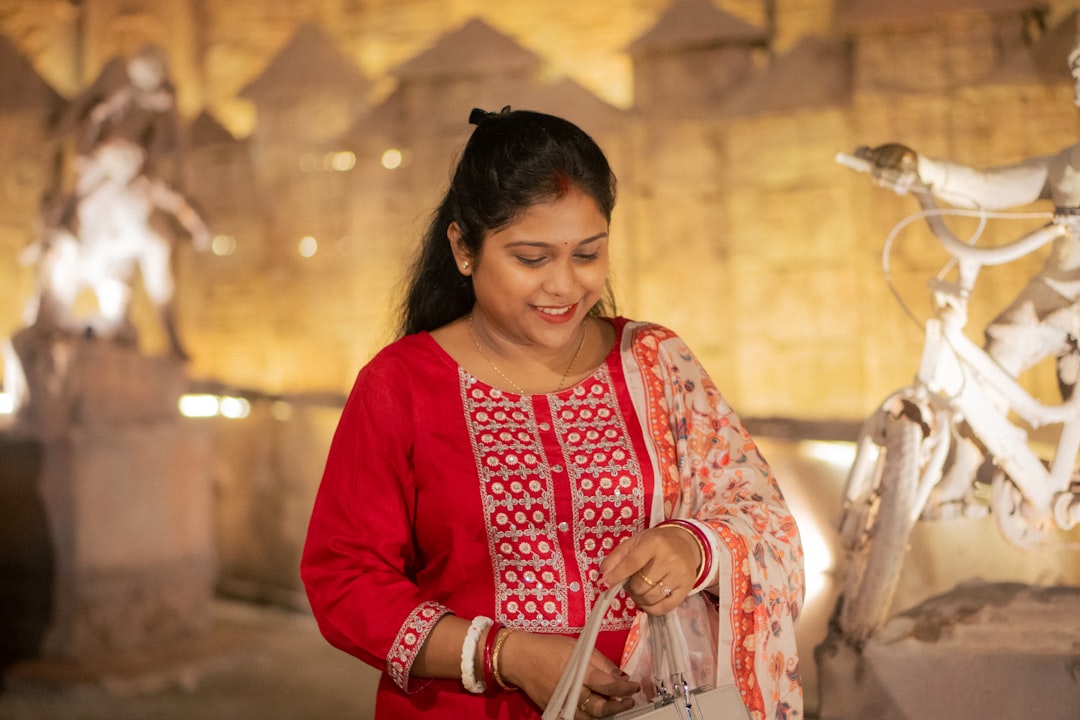
The vivid colors, elaborate patterns, & the tales woven into each article of traditional Indian apparel enthrall me as I explore its rich tapestry. Traditional Indian clothing is a reflection of the many cultures, histories, & identities that comprise this enormous country and goes beyond simply covering the body. Every article of apparel, from the gracefully draped sarees to the majestic turbans that denote honor, has a history that has been carried down through the ages.
Key Takeaways
- Traditional Indian clothing reflects the rich cultural heritage and diversity of India.
- Indian clothing has evolved over centuries, influenced by various historical, social, and cultural factors.
- Traditional Indian clothing holds great significance in Indian culture, representing values, beliefs, and customs.
- Different types of traditional Indian clothing include saree, salwar kameez, lehenga choli, dhoti kurta, and more.
- Regional variations in traditional Indian clothing showcase the unique styles and craftsmanship of different Indian states.
The way that traditional Indian clothing acts as a link between the past and the present has really caught my attention as I’ve been researching it. While adjusting to modern tastes, they capture the spirit of Indian heritage. I am reminded of how crucial it is to maintain these customs in a world that is constantly changing as I move through the many styles and forms. The beauty of traditional Indian attire is found in its capacity to convey tales of love, joy, and cultural pride in addition to its aesthetic appeal.
As varied as the nation itself is the history of Indian fashion. As I investigate the origins, I find that over thousands of years, different dynasties, invasions, and cultural exchanges have all had a significant impact on Indian clothing. One of the first urban societies, the Indus Valley Civilization, demonstrated a profound knowledge of textiles through the use of cotton weaving and dyeing methods that are still relevant today. I’m intrigued by how these early inventions paved the way for later advancements in Indian fashion as I study the historical clothing worn by people in this era. Over time, I have seen how the introduction of various rulers and cultures has changed fashion. For example, the Mughal era brought luxurious textiles and elaborate embroidery designs that revolutionized traditional clothing.
This time period’s blending of Indian and Persian styles produced a distinctive look that still has an impact on contemporary fashion. The way that traditional Indian attire has incorporated aspects from different cultures while retaining its unique identity intrigues me. Along with changes in fashion, this evolution also captures historical shifts in societal norms & values. In my perspective of Indian culture, traditional Indian attire is extremely important.
| Traditional Indian Clothing and Culture | Metrics |
|---|---|
| Number of traditional Indian clothing styles | Over 30 different styles |
| Popular traditional Indian fabrics | Cotton, silk, chiffon, and georgette |
| Significance of traditional Indian clothing | Reflects the diverse culture and heritage of India |
| Traditional Indian clothing for men | Dhoti, kurta, sherwani, and bandhgala |
| Traditional Indian clothing for women | Saree, salwar kameez, lehenga, and anarkali |
It acts as a representation of pride, identity, and community. Cultural meanings that differ among communities and geographical areas are infused into every article of clothing. As an illustration, the saree is more than just a piece of clothing; it is a symbol of elegance, tradition, and femininity. The deep-rooted ties that these garments create between generations come to mind when I see women wearing sarees at festivals or family get-togethers. Also, traditional attire is frequently essential to ceremonies and rituals. I see that certain clothing is picked for religious ceremonies & weddings not just because it is beautiful but also because it has cultural meaning.
The elaborate patterns and vivid colors are thought to bring blessings and good fortune. Traditional Indian attire thus becomes more than just a style; it is an essential component of spirituality and cultural expression. The diversity that exists within the vast array of traditional Indian clothing styles astounds me. Every region has distinctive fashions and attire that are a reflection of regional traditions and customs. The saree, for example, is arguably one of the most recognizable garments in India and comes in a myriad of styles, including the Tamil Nadu Kanjeevaram saree and the Varanasi Banarasi saree.
Each type uses its fabric, weave, and draping technique to tell a tale. In addition to sarees, I come across other traditional attire, like men’s kurta-pajamas, which are incredibly comfortable and stylish. Another gorgeous outfit that is frequently worn for festive occasions is the lehenga choli, which is distinguished by its intricate embroidery & vivid hues.
As I study these clothes more closely, I see that they are not only pieces of apparel but also displays of centuries-old artistry and craftsmanship. Regional differences in traditional Indian attire serve as evidence of the nation’s diverse cultural landscape. Different styles that represent regional customs and lifestyles are encountered as I travel through various states.
For instance, the elaborate embroidery that adorns Punjab’s colorful phulkari dupattas narrates tales of rural life. The exquisite kanjivaram sarees of Tamil Nadu, on the other hand, display the generations-old art of silk weaving. The weather in each area also affects what people wear. During the winter months, heavier textiles like wool are typical in the colder northern states, while lighter cottons are more prevalent in the hotter southern states.
This versatility demonstrates traditional clothing’s utilitarianism as well as its close ties to the land & environment. My appreciation for the diversity found in Indian traditional clothing grows as I become more knowledgeable about these regional variations. Across the nation, traditional Indian attire is a major component of festivals and celebrations. I observe how particular clothing is chosen to respect cultural customs and traditions as I immerse myself in these festive occasions.
Families, for example, frequently dress in new clothing during Diwali as a sign of rebirth & wealth. The spirit of joy and unity is reflected in the elaborate designs and vivid colors worn during this festival. Another important occasion that emphasizes traditional dress is weddings. I’m enthralled with the exquisitely embroidered lehengas and sherwanis as I watch lavish ceremonies that are full of music & dance.
These clothes represent cultural heritage & familial ties in addition to enhancing the event’s beauty. In this sense, traditional Indian attire becomes a vital component of festivities, tying together tales of cultural pride, love, and unity. There is an intriguing and significant relationship between traditional Indian attire and contemporary fashion. As I watch modern designers take cues from traditional clothing, I can see how they combine traditional methods with contemporary design to produce one-of-a-kind pieces that appeal to today’s consumers.
A growing appreciation for heritage while satisfying modern tastes is reflected in the modern fashion industry’s resurgence of handloom fabrics & artisanal craftsmanship. Also, contemporary collections are creatively reimagining classic motifs and patterns. I observe how designers use elements like block printing or embroidery to create modern silhouettes as I visit fashion shows and boutiques. This combination not only preserves traditional methods but also enables them to develop in a global setting. I find it fascinating how, despite the fast-paced fashion industry of today, traditional Indian attire still encourages creativity.
Traditional Indian clothing is largely defined by textiles and fabrics. When I learn more about this topic, I see that India has a vast array of textiles, each with a special history and meaning. Every textile, from the rough khadi woven by hand-spinning artisans to the opulent silk made in Varanasi, has a sense of craftsmanship and history that is firmly anchored in regional customs. Cultural customs, environmental factors, and aesthetic preferences are frequently reflected in fabric selection.
For example, wool is preferred in colder climates due to its warmth, while cotton is preferred in warmer climates due to its breathability. As I study these textiles, I am struck by how they combine functionality and artistic expression; each meticulously woven thread relates a tale that binds us to our ancestry. Traditional Indian attire has a complex & multidimensional symbolic meaning.
As I continue to investigate this dimension, I find that many pieces of clothing have deeper meanings than just their outward look. For instance, different colors frequently have distinct meanings; for instance, white represents mourning and purity, while red is linked to marriage and wealth. With this knowledge, my admiration for traditional clothing is enhanced. Also, some communities have rituals or life events that have great significance that call for the wearing of particular clothing. Respect for customs and cultural values is demonstrated by donning a saree or lehenga during significant ceremonies.
When I consider these symbols incorporated into fashion choices, I see how they act as a reminder of our common history & identity. Traditional Indian attire has experienced significant changes as a result of globalization, both positively and negatively. I see how traditional clothing has become more visible on global stages as I watch the growing interconnectedness of cultures worldwide. Today, designers are exhibiting their work all over the world, which promotes awareness of India’s rich textile legacy while enabling traditional techniques to reach a larger audience.
However, because mass production jeopardizes artisanal craftsmanship, globalization also presents difficulties for traditional practices. While negotiating this complicated terrain, I understand how crucial it is to find a balance between embracing modernity & maintaining authenticity. In the face of shifting global dynamics, traditional Indian apparel can survive by encouraging sustainable practices and supporting regional craftspeople.
As I have learned more about traditional Indian attire, I have realized how crucial it is to keep these vibrant cultural customs alive for upcoming generations. Efforts to support sustainable fashion and regional craftspeople can be extremely important in preserving these customs. We can help preserve our heritage by helping handloom weavers or taking part in workshops that honor traditional crafts. Also, education is essential in helping younger generations develop an appreciation for traditional clothing. Through storytelling & cultural events focused on traditional attire, I interact with communities and observe firsthand how these experiences foster a sense of pride in one’s heritage.
By raising awareness of the value of traditional Indian attire in our modern society, we can make sure that these lovely traditions endure for many more years. In conclusion, my research into traditional Indian attire has shown how deeply ingrained it is in our culture—a tapestry bound with identity, symbolism, artistry, and history. In this dynamic country called India, it is crucial that we celebrate this rich heritage together and preserve it not only as an artifact but also as an essential component of who we are as individuals as we navigate a world that is constantly changing due to globalization while cherishing our roots through these clothes.
Indian culture is rich and diverse, with traditional clothing playing a significant role in its cultural expression. From the vibrant saris of the north to the elegant dhotis of the south, each region in India boasts its unique style and attire. For those interested in exploring how to complement traditional Indian outfits with modern accessories, you might find this article on styling tips for big hair with the perfect accessories particularly insightful. It offers creative ideas on how to enhance your look by pairing traditional Indian garments with contemporary accessories, ensuring you stand out at any cultural event or celebration.
FAQs
What are traditional Indian clothing items?
Traditional Indian clothing items include sarees, salwar kameez, lehenga choli, dhoti kurta, and sherwani for men, and sarees, salwar kameez, lehenga choli, and anarkali suits for women.
What are the different types of sarees in Indian culture?
Some of the different types of sarees in Indian culture include Banarasi sarees, Kanjeevaram sarees, Chanderi sarees, Tussar silk sarees, and Bandhani sarees, among others.
What are the traditional colors and patterns used in Indian clothing?
Traditional Indian clothing often features vibrant colors such as red, green, blue, and yellow, as well as intricate patterns and designs such as paisley, floral motifs, and geometric patterns.
What are the significance of traditional Indian clothing?
Traditional Indian clothing holds cultural and religious significance and is often worn during festivals, weddings, and other special occasions. It also reflects the rich heritage and diversity of Indian culture.
How do Indian clothing styles vary by region?
Indian clothing styles vary by region, with each region having its own unique traditional attire. For example, the saree is more commonly worn in South India, while the salwar kameez is popular in North India.
What are some modern adaptations of traditional Indian clothing?
Some modern adaptations of traditional Indian clothing include fusion wear, where traditional elements are combined with contemporary styles, as well as the use of Western silhouettes and fabrics in Indian attire.